
Cautes and Cautopates
Cautes and Cautopates are the two torchbearers who often flank Mithras in Roman art. Cautes is usually shown with his torch raised. Cautopates usually points his flame toward the ground.
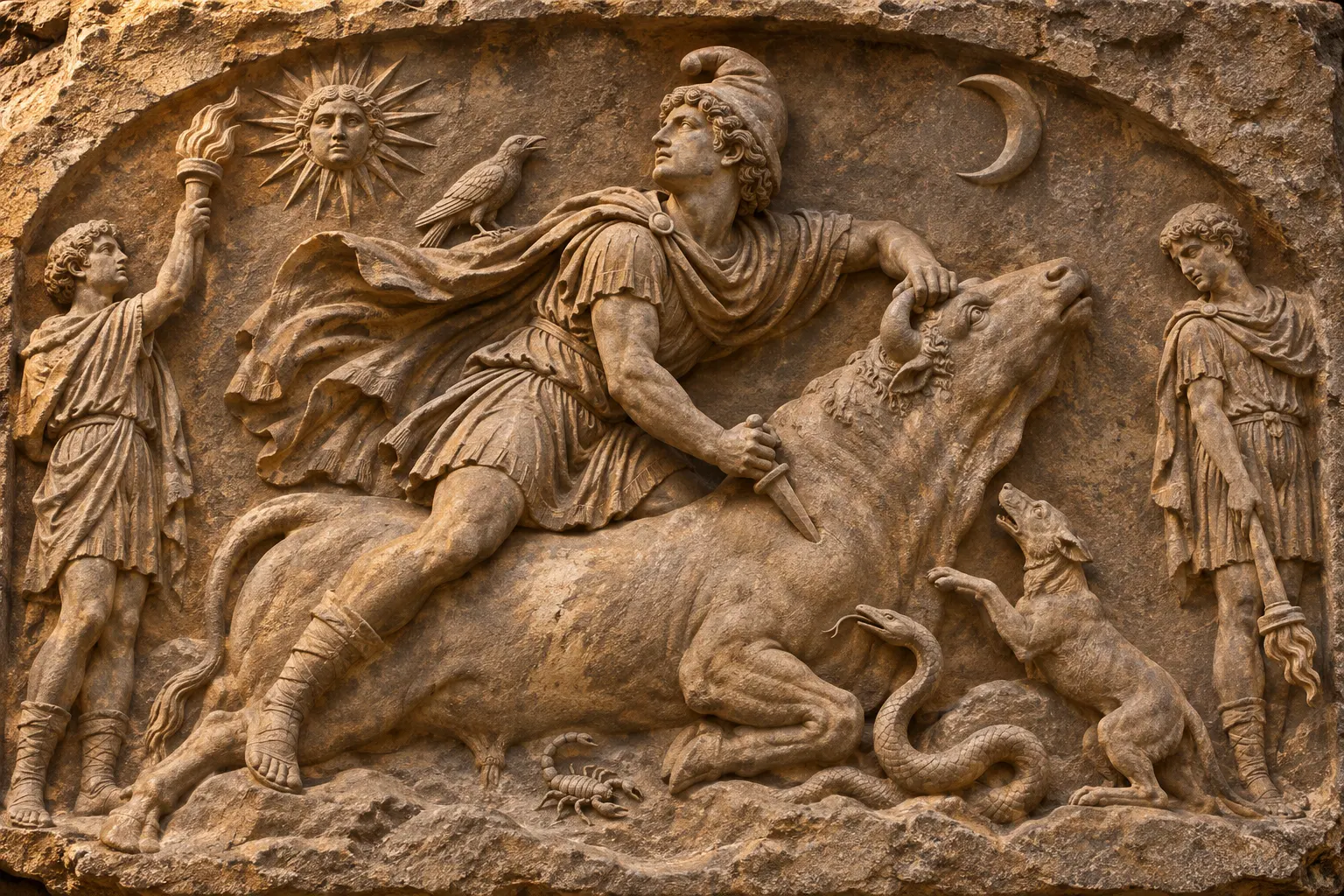
How to recognize the torchbearers
Start with the flame. The two figures often wear similar clothes and stand with their legs crossed. In a second-century marble relief catalogued by the Louvre, Cautes is at the lower left and Cautopates at the lower right. The catalogue identifies Cautopates by his inverted torch. See the marble relief.
You can also find a torchbearer on his own. The Louvre holds a marble Cautopates from the sanctuary at Sidon, in present-day Lebanon. His torch points down and a serpent is carved beside him. See the statue from Sidon.
What the torches mean in our practice
The raised and lowered flames suggest the beginning and end of daylight. This is how our Order reads them when we pray. The surviving images show us the figures and their gestures. Our prayers give those gestures a place in the day.
At dawn we invoke Cautes and consider the work ahead and the promises we mean to keep. At dusk we invoke Cautopates and set down the day’s work. The noon prayer is addressed to Sol.